10 Things About Dutch Life That Make Expats Want to Move There
Ten practical, emotional and fun reasons expats fall for life in the Netherlands, from public trust and free festivals to gezelligheid and Dutch traditions.
May 24, 2026 · 13 min read
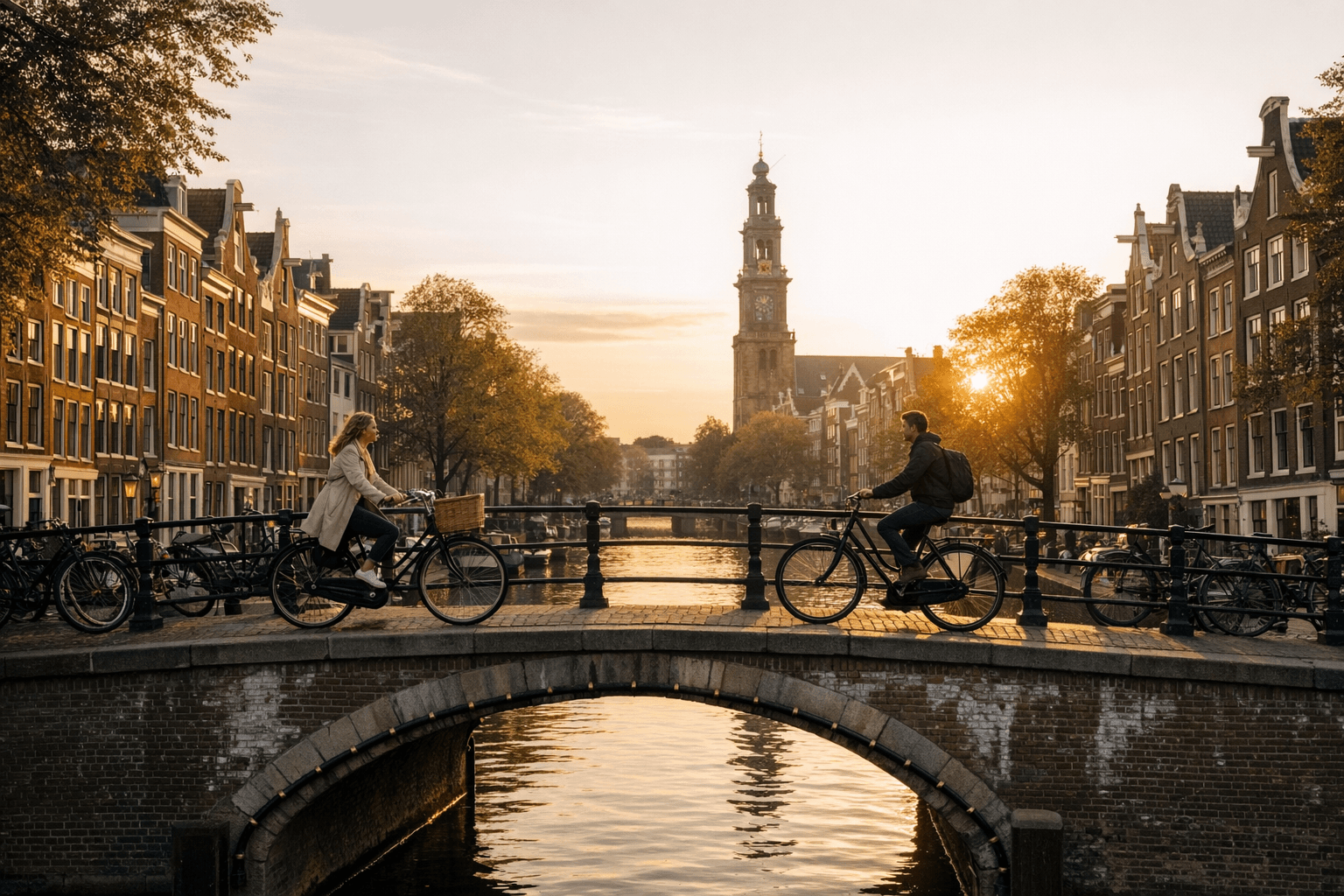
Most people arrive in the Netherlands knowing two things: it rains a lot and everyone cycles. Both are true. But neither explains why so many expats come for a short work contract and quietly start imagining a much longer life here.
The real appeal is not one dramatic thing. It is the accumulation of small benefits: safe streets, reliable plans, public transport that makes weekends easy, free national festivals, rituals that help you belong, and a culture that values directness over performance.
Below are ten parts of Dutch life that make moving to the Netherlands feel worth it. Some are practical. Some are emotional. Some are simply fun. Together, they explain why the country gets under your skin slowly, then all at once.
Get sharper Netherlands guides in your inbox
Practical travel notes, expat context, and polished city ideas without the noise.
1. You get a society that still knows how to pause
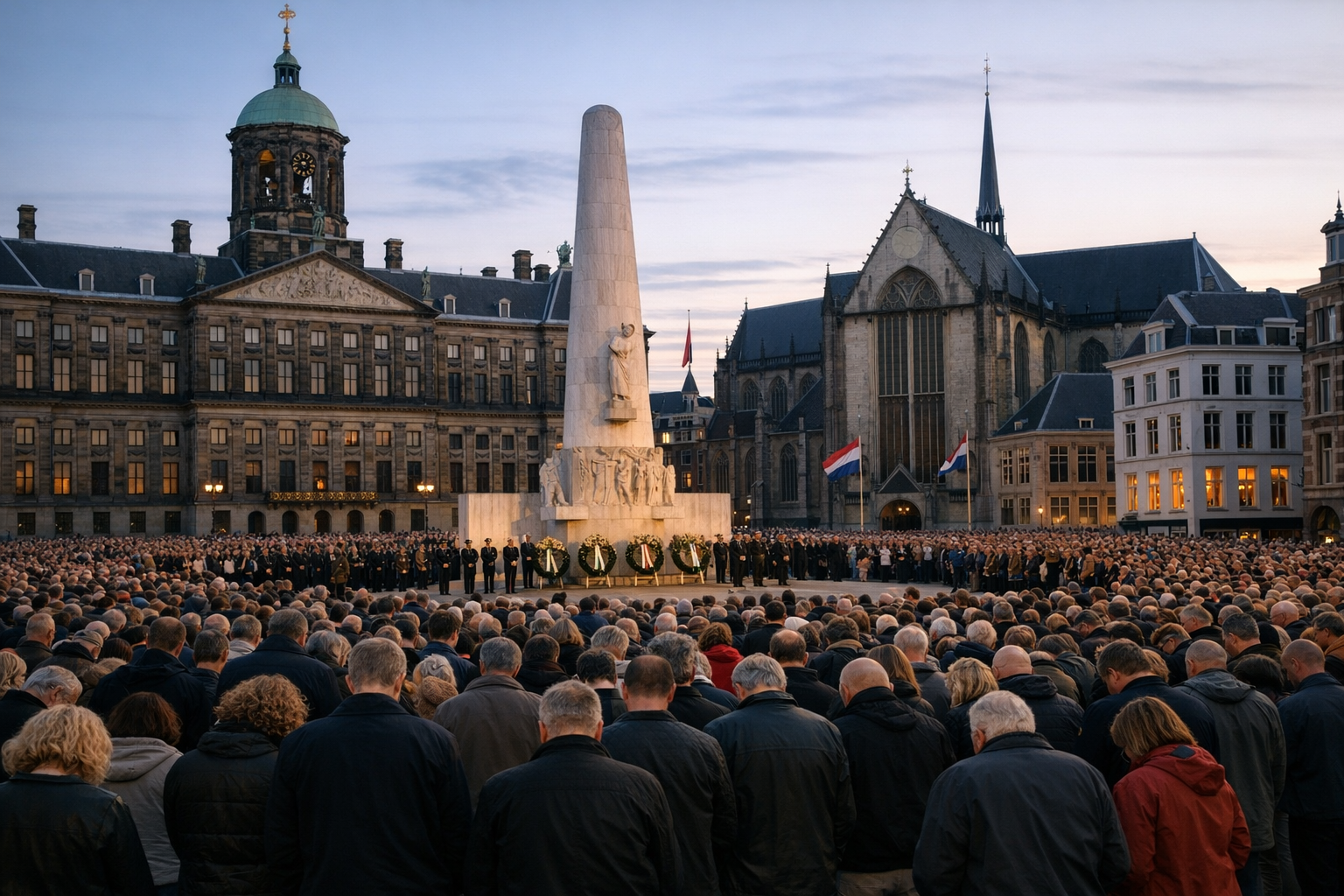 Dam Square in Amsterdam fills with people for the 8pm silence on May 4th.
Nothing prepares you for it the first time.
It is the evening of May 4th, Dodenherdenking, Remembrance of the Dead. You might be walking home through Amsterdam, or sitting on a tram, or waiting for a friend outside a cafe in Rotterdam. And then, at exactly 8pm, everything stops.
The tram halts mid-route. The cyclist in front of you puts their foot down and bows their head. Conversations on cafe terraces end mid-sentence. A street that was full of movement thirty seconds ago becomes completely still.
For two minutes, the entire Netherlands pauses to remember every civilian and soldier who died in war since the start of World War II. Not just Dutch soldiers. Everyone. The commemoration at Dam Square in Amsterdam includes the royal family and national politicians. Churches toll their bells. The silence is total.
Expats who witness this for the first time without knowing what is happening describe the experience in remarkably similar ways. Confusing for the first five seconds, then deeply moving for the rest of your life.
Why this matters if you move here: public life in the Netherlands can feel unusually grounded. There are moments when the country behaves like a community, not just a collection of individuals. For expats, that can be surprisingly reassuring.
2. You get free culture built into the calendar
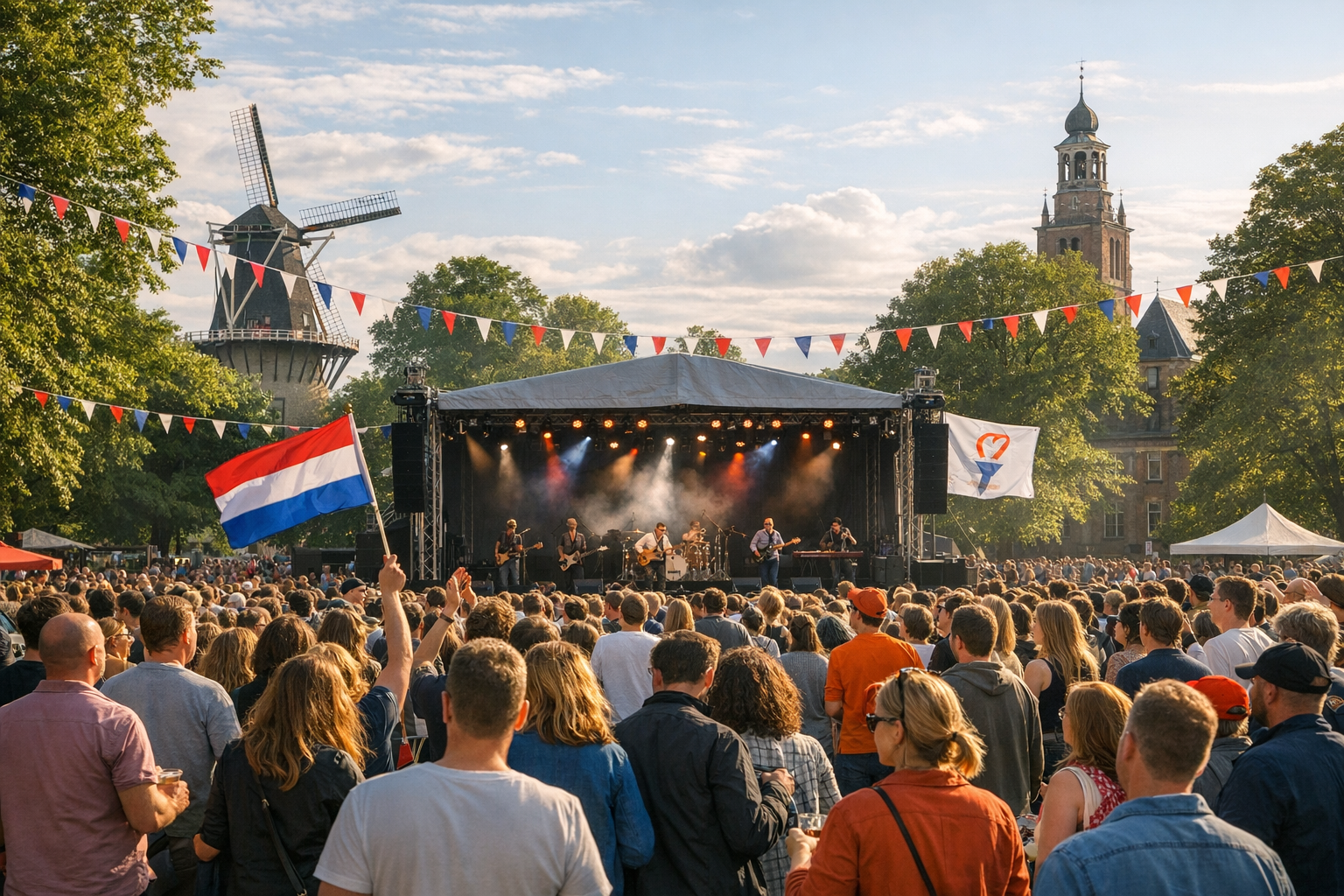 Liberation Day festivals are free to attend and happen in cities across the country.
Every year on May 5th, Liberation Day, the Netherlands celebrates the end of German occupation in World War II with fourteen simultaneous free music festivals across the country.
The day begins with a flame. The Prime Minister lights it in the courtyard of Hotel de Wereld in Wageningen, the exact building where German forces surrendered to Allied troops in 1945. From there, groups walk across the country carrying the flame in relay, spreading the light from the original site of liberation outward.
By afternoon, every provincial city has a stage, a crowd, and free concerts running until the evening. The day closes with a televised concert in Amsterdam on the water, performed in the presence of the King and Queen.
The entire thing costs nothing to attend. That detail surprises almost every expat. A national celebration of this scale, completely free, because the Dutch believe liberation belongs to everyone.
What you get: a country where public events are not always hidden behind expensive tickets. King's Day, Liberation Day, neighbourhood markets, museum nights, summer festivals and local concerts make it easy to have a social life without spending heavily every weekend.
3. You get traditions that make everyday life feel warm
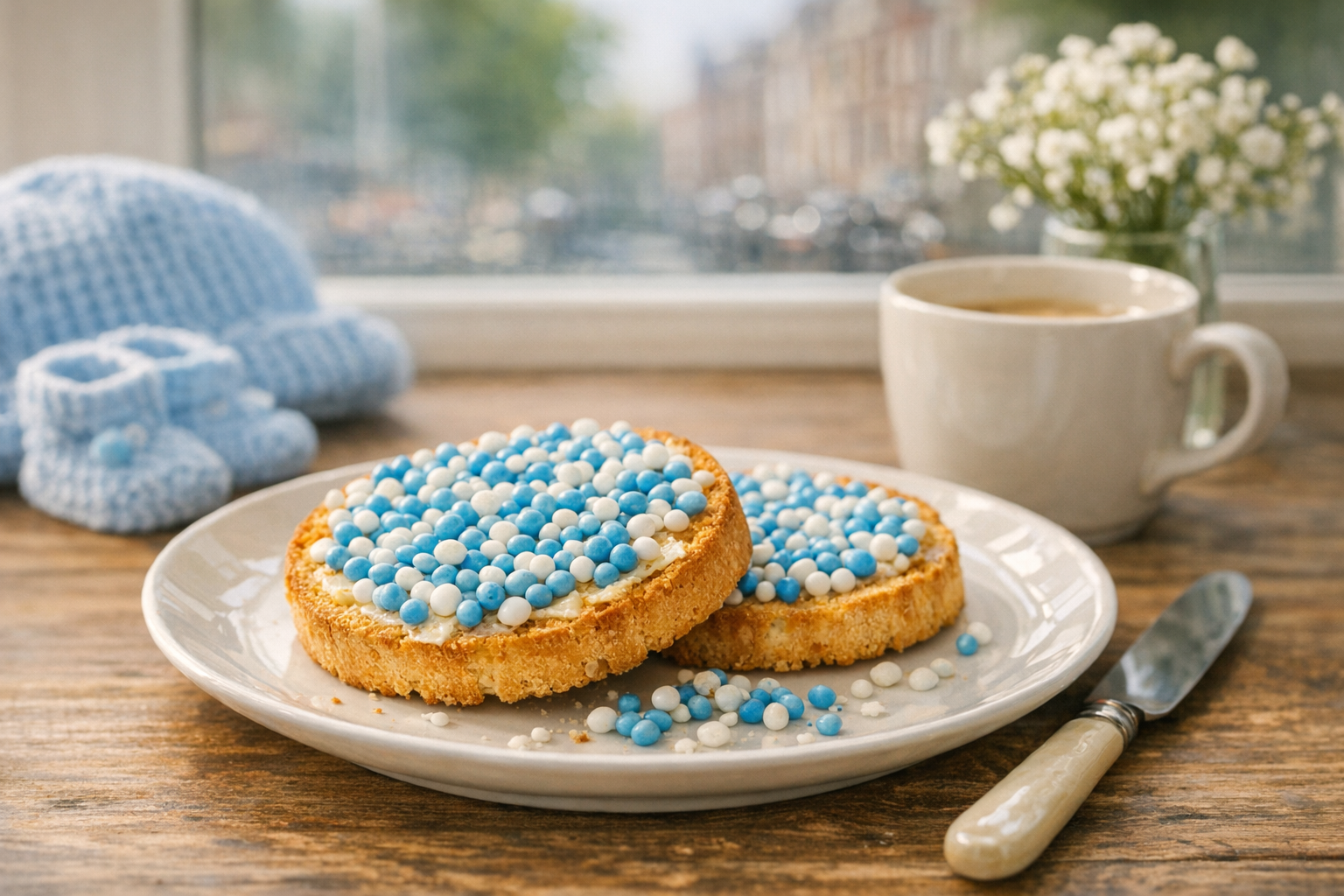 Beschuit met muisjes is how the Dutch announce a new baby.
This one is told by almost every expat in the Netherlands at some point.
You are at work, or in a shop, or visiting a neighbour. Someone offers you a rusk with small round sprinkles on top. Blue and white, or pink and white. You eat it and say thank you, genuinely unsure what just happened.
The answer is: someone just had a baby.
Beschuit met muisjes, rusk with little mice, is the Dutch way of announcing a newborn. When a baby arrives, the family serves these anise-seed-covered rusks to every visitor. Blue and white for a boy. Pink and white for a girl. And when a member of the Royal family is born, the muisjes are orange and white.
The tradition is centuries old. New parents buy dozens of packets and spend the first weeks of their child's life serving them to everyone who comes through the door. Neighbours, colleagues, the postman. Everyone gets one.
Expats who discover this tradition through a spontaneous workplace biscuit often describe it as the moment the Netherlands stopped being a country they lived in and started being a place they belonged to.
What you get: a culture with small social rituals that pull you in. You may not understand them at first, but they become part of your own life faster than expected.
4. You get neighbourhoods that notice life milestones
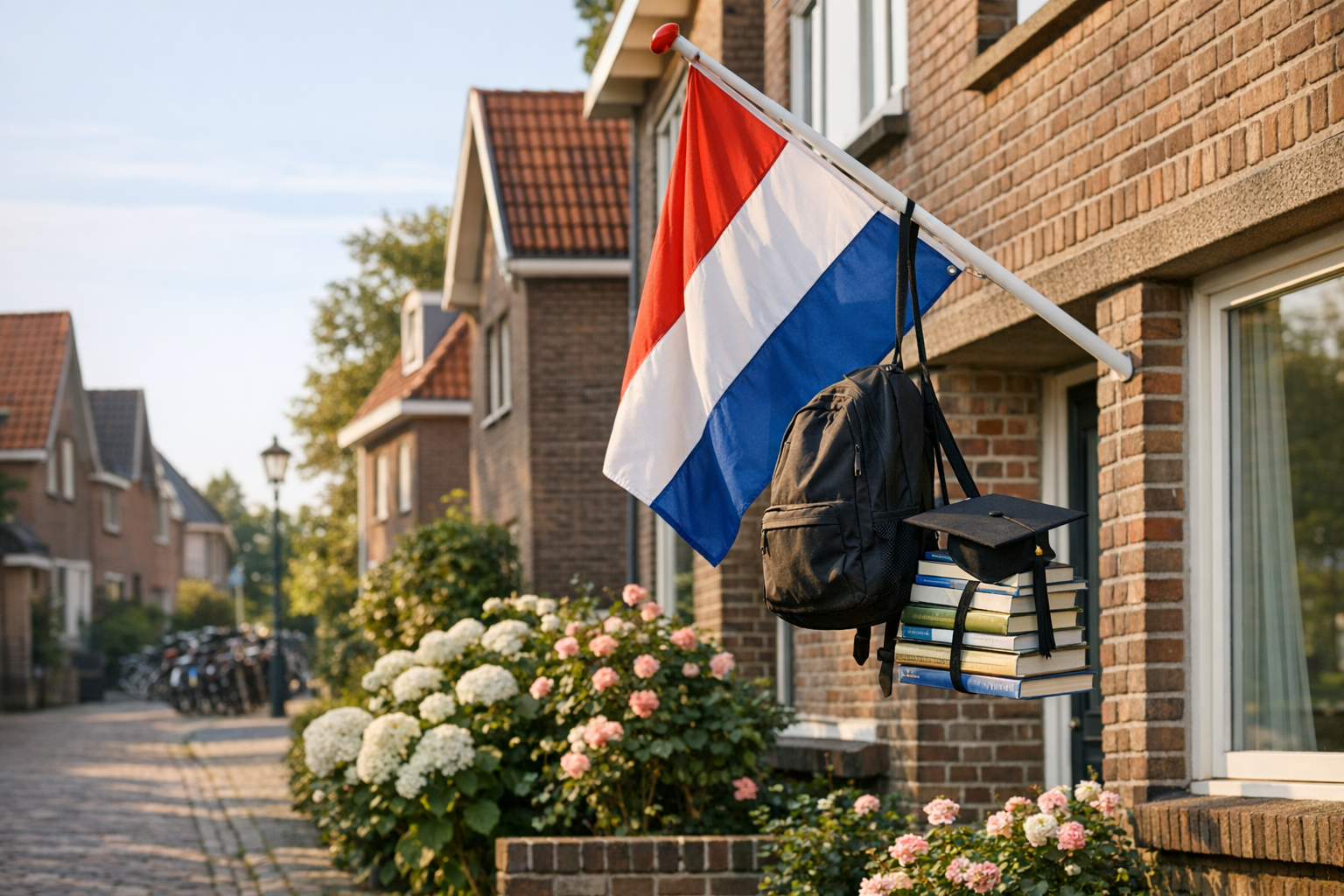 Dutch graduation is often announced with a school bag hanging outside the house.
Somewhere in every Dutch residential neighbourhood, at the end of June, you will see a school bag and a pile of books hanging from a flagpole or dangling from a window.
No announcement. No ceremony. Just a bag in the wind.
This is how Dutch students tell the street that they have finished school. The bag goes up, the neighbourhood sees it, and the congratulations follow. Some families add banners. Some use a bicycle. The specific objects do not matter. What matters is the visibility, the public declaration that something worth celebrating has happened here.
It is a tradition that requires no explanation to Dutch people and completely baffles everyone else. Which is, in some ways, the most Dutch thing about it.
Why this is appealing: Dutch life can look private from the outside, but many neighbourhoods still have a soft public awareness of each other. Births, graduations, birthdays and national days show up in windows, flags and front gardens.
5. You get fun, slightly ridiculous celebrations
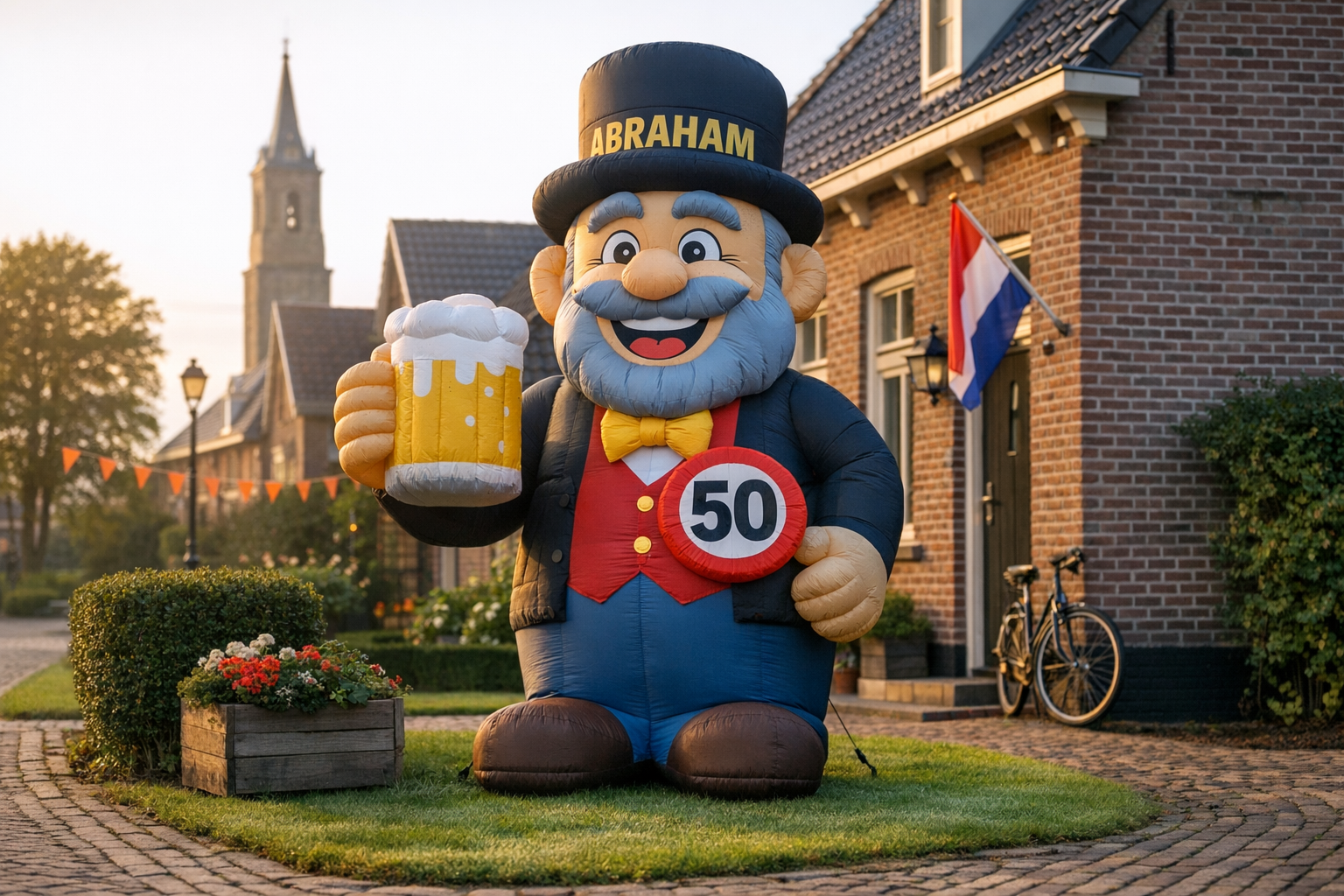 Abraham and Sarah dolls appear outside Dutch homes without warning.
In the Netherlands, your 50th birthday does not pass quietly.
At some point during the night before, your friends and family sneak to your house and install a life-sized stuffed figure in your front garden. Abraham for a man. Sarah for a woman. The names come from the Bible, from a passage in which the wisdom of old age is connected to having "seen Abraham." In the Netherlands, reaching 50 means you have lived long enough to have that wisdom.
The tradition has evolved over time. Today many Dutch people do not know the biblical origin at all. It has become a lighthearted prank, a celebration, a way for friends to publicly mark a milestone that cannot be hidden or ignored.
The doll is often dressed to match the birthday person's job or personality. A nurse gets a doll in scrubs. A cyclist gets a doll on a tiny bike. The whole street wakes up to see it. You cannot pretend you have not turned 50. The whole neighbourhood knows.
Expats who witness their first Dutch 50th birthday from the outside, not knowing what the doll means, describe it as one of the most confusing and eventually heartwarming things they have seen.
What you get: a country that is serious about systems but not too serious about itself. Dutch humour is dry, direct and often public. Once you are part of it, these traditions make ordinary life more fun.
6. You get friendships that are slower, but more reliable
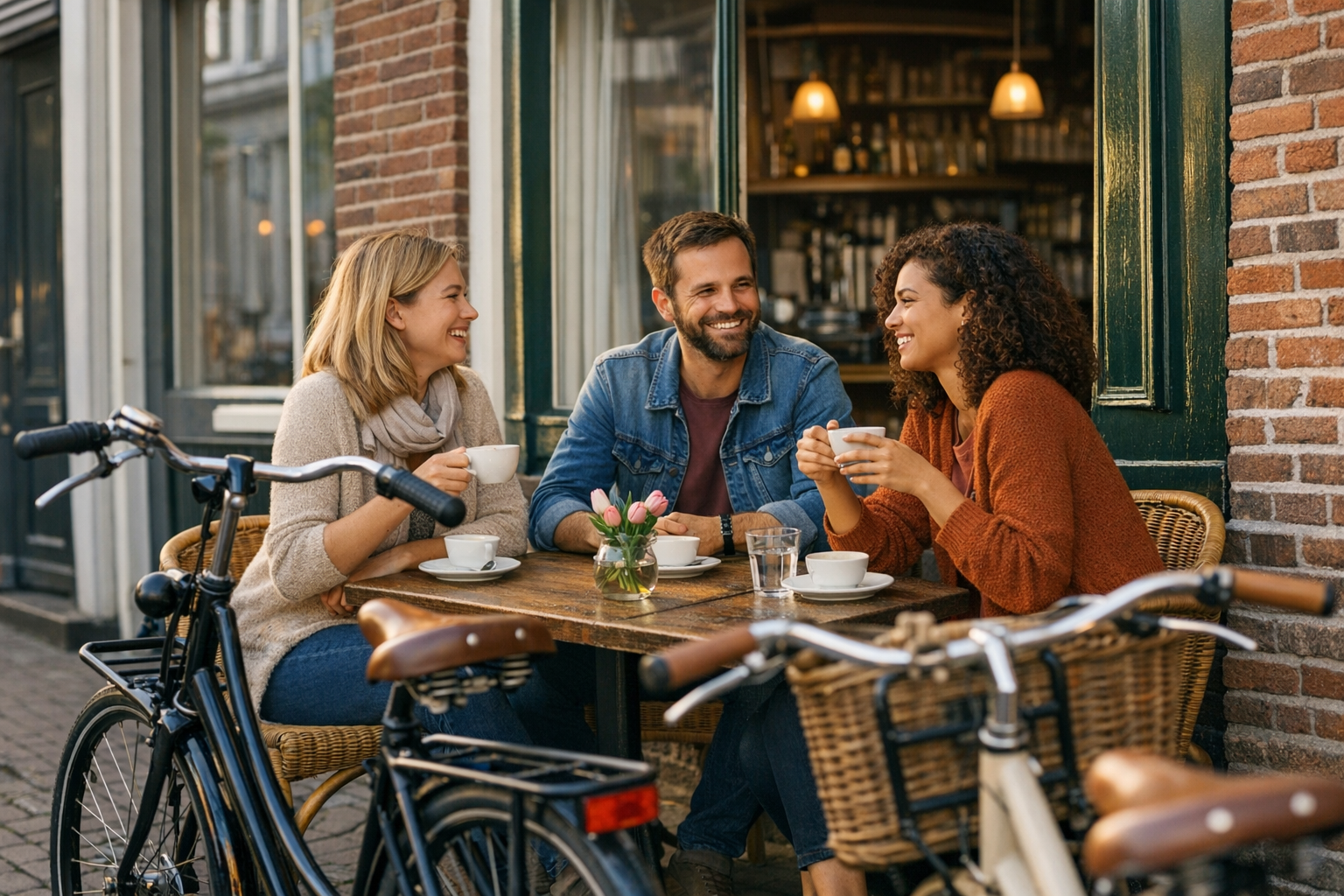 Dutch friendships often take longer to form, but plans tend to mean something.
One of the things that surprises expats most about building a social life in the Netherlands is not the directness. It is the reliability that comes with it.
In many countries, "we should get together soon" is a pleasantry. A way of ending a conversation warmly without making a commitment. In the Netherlands, people do not say this unless they mean it. If a Dutch person says they want to meet up, they will follow through with a specific date, a specific time, and they will be on time.
For an expat who has just moved to a new country with no existing network, that reliability becomes one of the most valuable things about Dutch friendship. Every plan made is a plan kept. Every coffee suggested is a coffee that actually happens.
It takes longer to be invited in. But once you are, you are in properly.
The benefit: less social guesswork. People may not perform instant warmth, but plans tend to be real, boundaries are clearer, and friendships become dependable.
7. You get gezelligheid, the social comfort people stay for
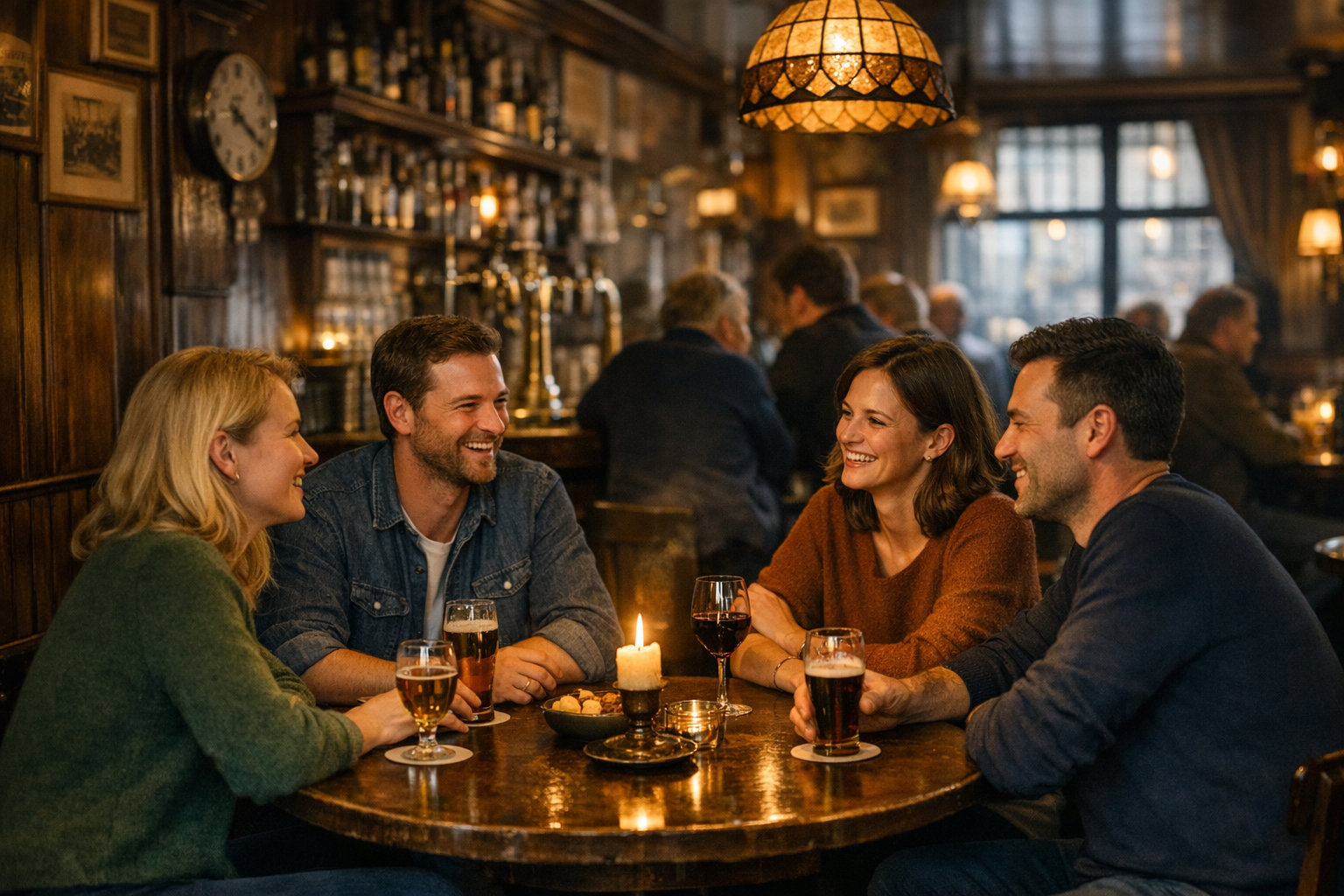 A Dutch brown cafe (bruin cafe) is the physical embodiment of gezelligheid.
There is no English translation for gezelligheid. Cosy comes closest, but it misses the social dimension. Hygge is the Danish approximation that most people know, but gezelligheid is older and carries a slightly different weight.
It describes a quality of atmosphere and connection. A warm room. A round table where everyone fits. Conversation that continues past the point when anyone intended to stay. The Dutch phrase "Gezelligheid kent geen tijd," cosiness knows no time, is used to tell anyone who tries to leave too early that they are simply not allowed to go yet.
You find it in the small brown cafes where locals sit elbow to elbow over beer. You find it at a Sunday afternoon borrel with bitterballen going cold because nobody wants to stop talking. You find it in Dutch homes with big windows and fresh flowers and furniture arranged for conversation rather than for watching television.
Expats who stay in the Netherlands long enough to understand gezelligheid often describe returning to their home country and realising for the first time that something had been missing. They just had not had a word for it.
What you get: an everyday version of comfort that does not require luxury. A good table, warm light, simple snacks, honest conversation and time that stretches. For many people, that is a better quality-of-life upgrade than a bigger apartment.
8. You get easy access to nature and small seasonal rituals
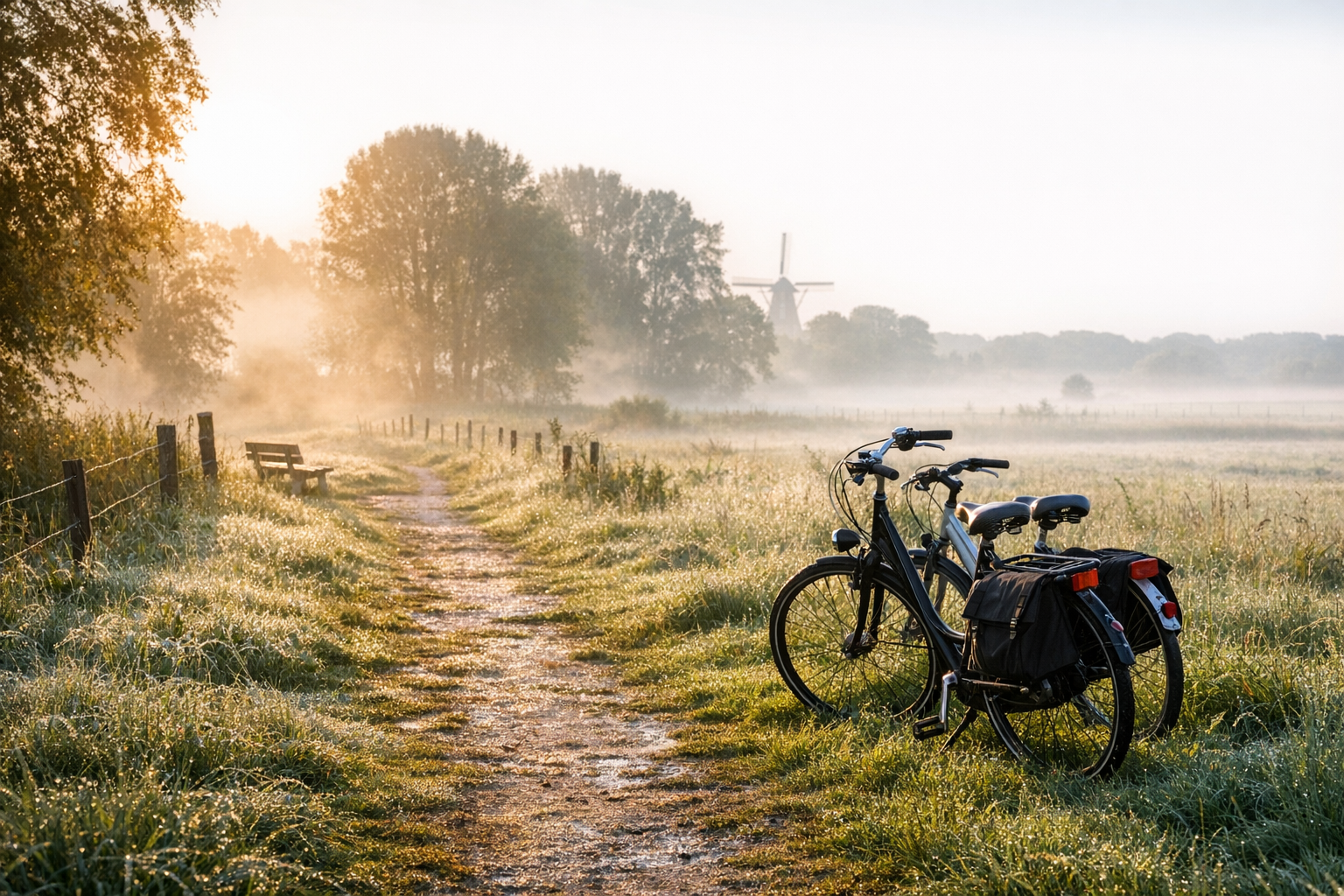 Dutch nature is close enough that a simple morning walk or bike ride can reset the week.
Dauwtrappen, which translates literally as "kicking the dew," is an old Dutch tradition of waking early on Ascension Day to walk or cycle barefoot through morning dew. It was once believed that dew on that particular morning had healing properties. Though less common today, many Dutch people still enjoy early morning walks in nature to mark the day.
Nobody tells you about this one. You find out because you are awake early on an Ascension Day morning, walking through a park, and you see a Dutch person take their shoes off and keep walking. If you ask why, they will explain with the mild embarrassment of someone sharing a tradition they love but cannot fully justify.
The Netherlands has been Christian, pragmatic, secular, and Protestant in rotation over the centuries. It has accumulated traditions from all of those eras without always being able to explain where they came from. Barefoot dew-walking in May is one of them. It is strange and old and completely charming.
The practical benefit: Dutch nature is easy to reach. Beaches, forests, dunes, lakes and cycling routes are close even when you live in a city. You do not need a dramatic holiday to reset; sometimes you just need a train, a bike and a free morning.
9. You get a culture of openness and public trust
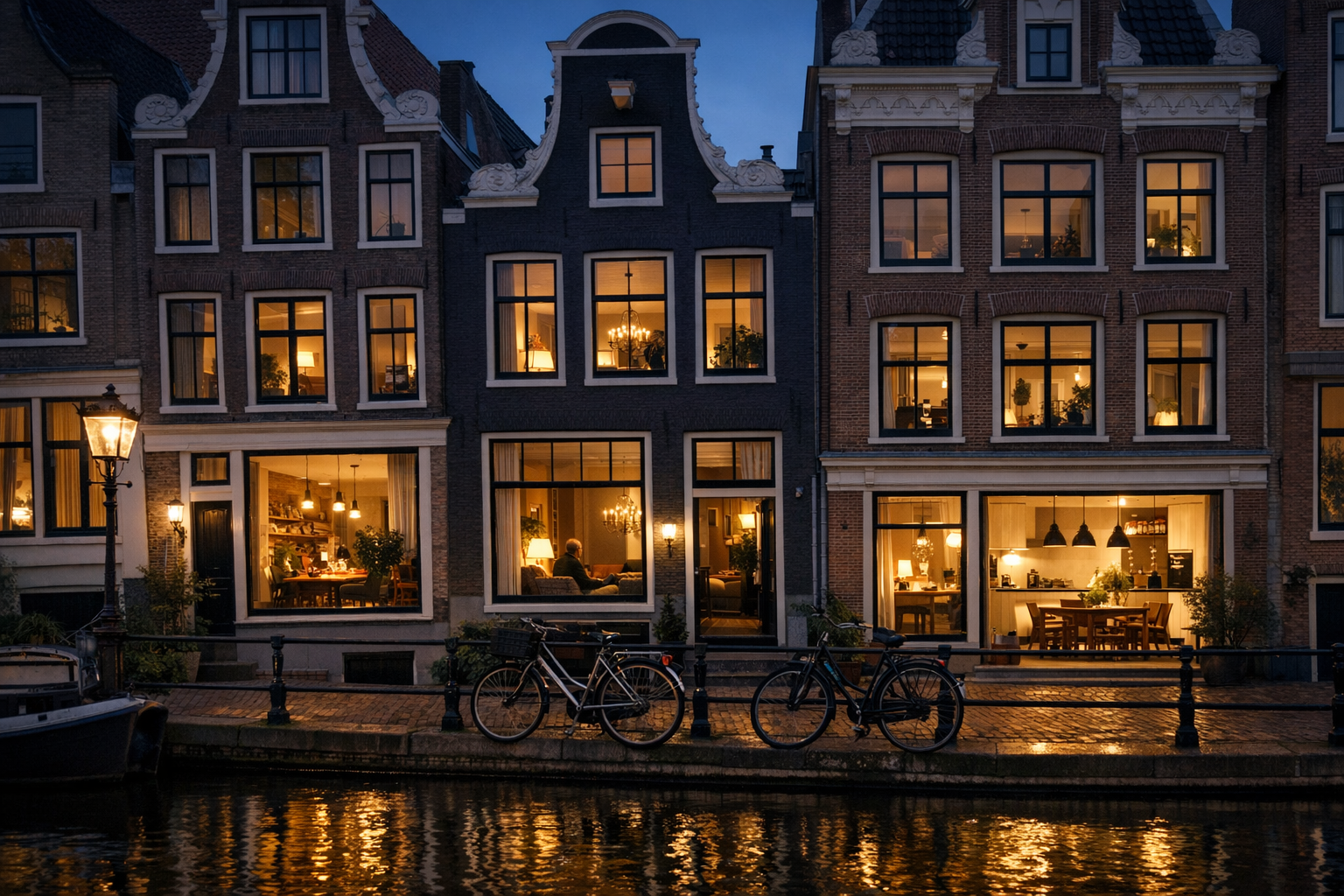 Dutch windows have been uncurtained since the era of Vermeer.
One of the first things visitors notice in the Netherlands is that Dutch people do not close their curtains. From the street, you can see directly into living rooms, kitchens, entire ground floors of homes, all lit up and visible.
The assumption is that it is about openness, or pride in the home. The actual origin is older and more interesting.
It traces back to the Dutch Protestant tradition of the 17th century, the era of Vermeer and Rembrandt. In Calvinist culture, moral virtue was demonstrated publicly. Having nothing to hide meant showing nothing was hidden. Open curtains were a statement: look at my home, look at my life, there is nothing in here that cannot be seen.
Dutch masters like Vermeer and Pieter de Hooch painted this exact quality, capturing the light coming through open Dutch windows into domestic interiors. Four hundred years later, the tradition endures, now more habit than theology but still distinctly, unmistakably Dutch.
Why people like living with this: the Netherlands often feels transparent by default. From open windows to direct feedback at work, the culture can reduce the exhausting layer of guessing what people really mean.
10. You get quiet community when it actually matters
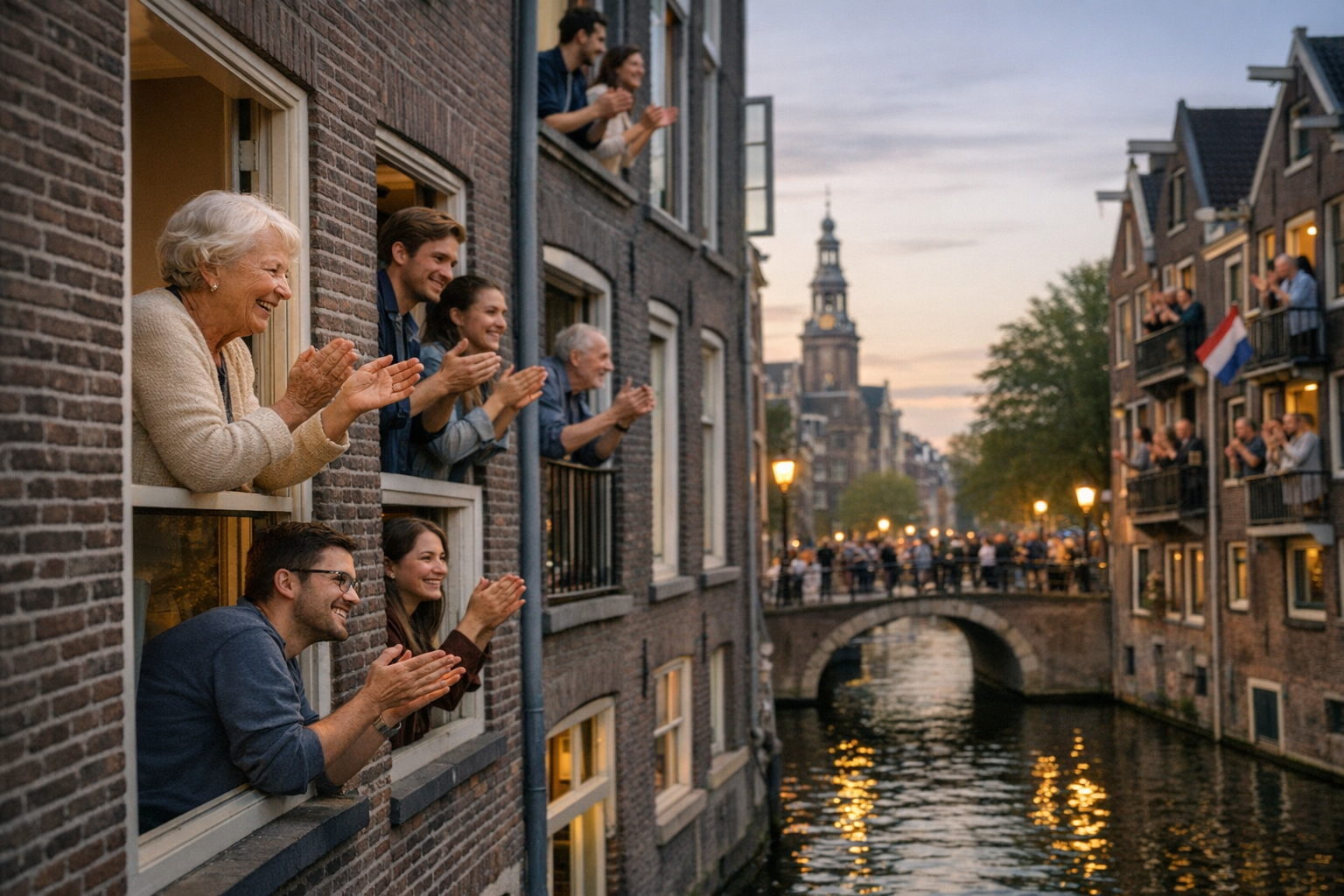 Dutch community comes into focus most clearly during difficult times.
This is the one that expats who lived in the Netherlands during the COVID-19 pandemic talk about most.
Groups of students organised spontaneously to deliver groceries to those in self-isolation. Every Tuesday evening at 8pm, the entire country stepped to their windows and balconies to applaud healthcare workers. Churches throughout Amsterdam tolled their bells. A hashtag called coronahulp collected hundreds of heartwarming stories and offers of help from people across the country.
For expats living alone in a new country, far from their families, that moment of collective care was significant. Not because it was dramatic or unusual by Dutch standards. But because it revealed something about the social contract that exists in the Netherlands, a quiet understanding that people look out for each other when it matters, without being asked.
The Netherlands will not always be warm to you in the ways you expect. The Dutch are direct. They do not perform friendliness. But when it counts, they show up. And knowing that, for an expat who has left their whole network behind, is worth more than any welcome party.
What you get: a social contract that is more practical than sentimental. It may not always feel emotional on the surface, but there is real value in living somewhere people broadly accept shared responsibility.
One last thing
If you are considering moving to the Netherlands or have just arrived, these stories are not the exception. They are the texture of ordinary Dutch life. The biscuit with blue sprinkles will arrive on a random Tuesday. The 8pm silence will stop you in your tracks on a May evening. Gezelligheid will sneak up on you over a beer you did not intend to stay for.
The Netherlands rewards patience. Give it six months before you decide what you think of it. The biggest benefits are not always obvious in week one. They show up when your daily life starts to feel lighter, more organised, more social, and more your own.
Planning your move to the Netherlands? Start with our complete expat checklist for 2025 and step-by-step BSN guide.
Sources
- DutchReview: Dutch Quirk 86: Abraham and Sarah traditions
- Expat Housing Network: Why we love living in the Netherlands
- IamExpat: How I fell in love with the Dutch way of life
- Access NL: Dutch traditions you should know
- Wikipedia: Dodenherdenking
- Wikipedia: Liberation Day Netherlands
- Expat Focus: 10 things to love about Dutch life
- Civilisable: Holiday traditions in the Netherlands
Get sharper Netherlands guides in your inbox
Practical travel notes, expat context, and polished city ideas without the noise.
Related articles
View category
Dutch Culture
15 Best Dutch Desserts You Need to Try
May 24, 2026 · 15 min read
A guide to the best Dutch desserts to try, from stroopwafels, poffertjes and appeltaart to tompouce, oliebollen, bossche bol, vlaai, hagelslag and more.

Dutch Culture
A Clear Guide to Dutch Birthday Circles
May 17, 2026 · 1 min read
A friendly guide to the Dutch birthday circle tradition, including what to expect, what to bring, and how to join in comfortably.