Moving to the Netherlands: Complete Expat Checklist 2025
A practical Netherlands relocation checklist for expats, covering housing, gemeente registration, BSN, banking, health insurance, DigiD, transport, and the first three months.
May 24, 2026 · 9 min read
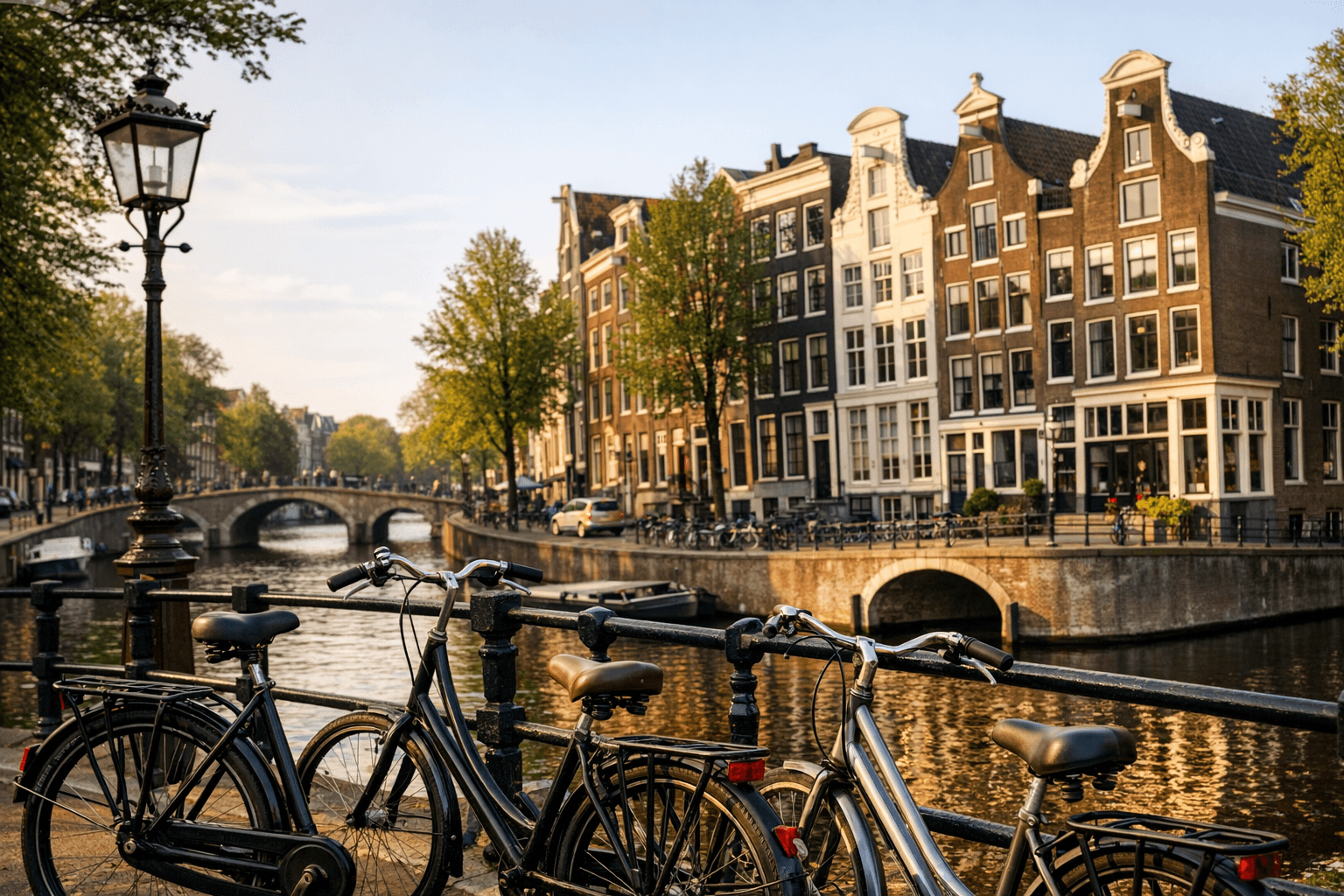
So you're moving to the Netherlands. Congratulations. Now brace yourself for paperwork.
The good news is that the Dutch system, while bureaucratic, is actually well-organised once you understand how it works. The bad news is that everything depends on everything else. You can't open a bank account without a BSN. You can't get a BSN without an address. You can't register an address without a landlord who cooperates. It's a chain, and if one link breaks, you're stuck.
This checklist cuts through that confusion. Follow it in order, and your first weeks in the Netherlands will be significantly less stressful than most expats experience.
Get sharper Netherlands guides in your inbox
Practical travel notes, expat context, and polished city ideas without the noise.
Before You Arrive
Secure a permanent address first. This is the most important thing on this list.
Everything in the Netherlands flows from your registered address. Without one, you cannot register at the municipality, and without municipality registration, you cannot get your BSN number, open a bank account, or access healthcare. Do not arrive without confirmed housing.
If your housing isn't ready when you land, book a short-stay apartment for the first one to two weeks. Never use a hotel or Airbnb as your registered address. Municipalities will reject this.
Checklist before you board the plane:
- Signed rental contract with your Dutch address
- Valid passport (check it has at least 6 months validity)
- Birth certificate: bring the original, plus a certified translation if it's not in English, Dutch, German or French
- Marriage certificate if applicable (same translation rules apply)
- Residence permit or visa if you're a non-EU citizen
- Employer letter if relocating for work
- Health insurance arranged or at least researched
- Dutch bank account research done (you'll need one within days)
- €3,000 to €5,000 buffer for first month costs (deposit, rent, setup costs)
Week One: The Non-Negotiables
Register at the Gemeente Within 5 Days
 Book your gemeente appointment before you land if possible. Photo: Unsplash
The moment you arrive, your clock starts. If you plan to stay longer than four months, Dutch law requires you to register at your local municipality (gemeente) within five days of arrival.
This registration is how you get your BSN number (Burgerservicenummer), your Dutch citizen service number that unlocks basically everything else. Without it, you cannot legally work, open a bank account, access healthcare, or sign a rental contract.
According to the Dutch government's official guidance, registration must happen at the gemeente where you will actually be living, not the nearest office to where you land.1
How to register:
- Book an appointment online at your gemeente's website. Search "gemeente" followed by your city name to find yours.
- Major cities like Amsterdam, Rotterdam, Utrecht, and The Hague have dedicated expat desks for international arrivals. Use these. They're faster and staff speak English.
- Amsterdam's main City Office sometimes accepts walk-ins, but book an appointment to be safe. Slots fill up quickly, especially in September.
- Bring your passport, rental contract, birth certificate (with translation if needed), and any visa or residence permit documents.
What happens at the appointment: An officer verifies your identity and address, registers you in the BRP (Basisregistratie Personen, the Dutch Personal Records Database), and issues your BSN. In most cases you receive your BSN the same day, either printed on a letter at the desk or sent by post within a few days. In busier offices it can take up to two weeks, so don't delay booking.
- Appointment booked at gemeente
- All documents gathered
- BSN received
Open a Dutch Bank Account Within the First Week
A Dutch IBAN is not optional. Landlords, employers, and almost every service provider in the Netherlands expect payments from a Dutch account. Getting paid internationally while you're here is technically possible but practically painful.
The major banks:
- ING and ABN AMRO: most widely used by expats, with English-language services available
- Rabobank: strong in rural areas, good customer service
- bunq: fully digital, fast to open, good for tech-savvy expats
- N26: digital bank, easy signup, useful if you're transitioning from another European country
What you need:
- Passport or EU ID card
- Proof of Dutch address (your rental contract works)
- BSN number
Some banks will open an account before your BSN arrives. ING and ABN AMRO are known to allow this in some cases. Ask specifically when you visit.2
- Bank account opened
- Dutch IBAN received
- Salary payment set up with Dutch account
Apply for DigiD As Soon As You Have Your BSN
DigiD is your digital identity for the Netherlands. You'll use it to access tax returns, healthcare platforms, government services, and dozens of other official services. Without DigiD, you're doing everything by post, which is slow and annoying.
Apply at digid.nl/en as soon as you have your BSN. The activation code arrives by post in three to five working days. Apply early. You'll need it sooner than you think.
- DigiD application submitted
- Activation code received by post
- DigiD activated
Week Two: Health, Transport, and Settling In
Arrange Dutch Health Insurance Within 4 Months
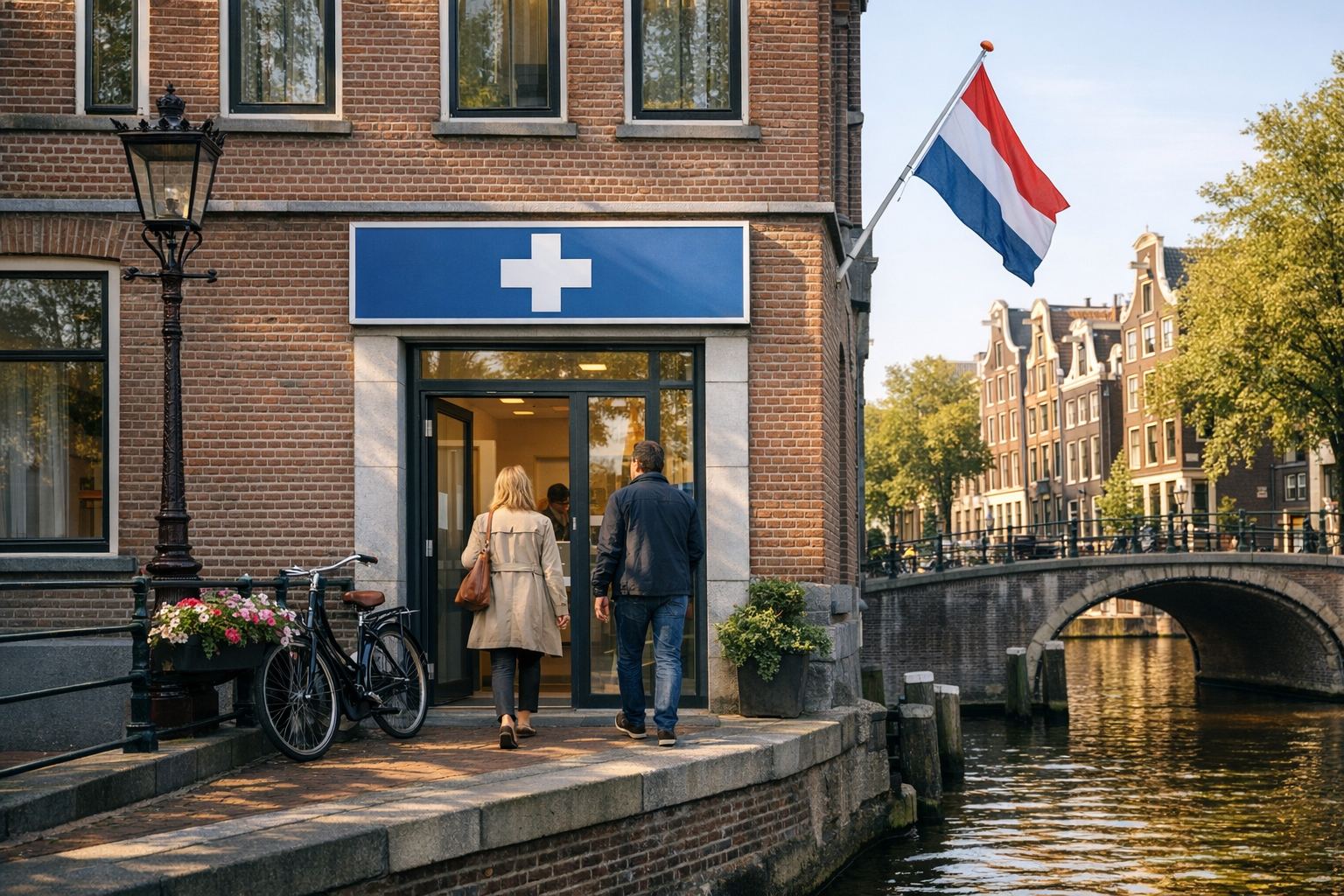 Health insurance is legally required within four months of registration. Photo: Unsplash
If you're living or working in the Netherlands, basic Dutch health insurance (basisverzekering) is legally required. The deadline is four months after you register, but earlier is better. Gaps in coverage can mean fines.
EU/EEA citizens: You may be able to use a European Health Insurance Card (EHIC) temporarily, but you'll still need Dutch insurance for long-term residence.
Non-EU citizens: Arrange Dutch insurance as a priority once your BSN is active.
The main providers are Zilveren Kruis, VGZ, CZ, and Menzis. Prices are broadly similar, around €130 to €160 per month for basic coverage. Compare at zorgwijzer.nl, which is available in English.3
- Dutch health insurer selected
- Policy activated
- GP (huisarts) registered in your neighbourhood
Get Your OV-chipkaart or Use OVpay
Public transport in the Netherlands is excellent. Trains, trams, buses, and metros all connect well. To use them, you need either:
- OVpay: tap in and out with your contactless debit or credit card, or Apple/Google Pay. Available since 2023 and now widely accepted across the country.
- OV-chipkaart: the traditional travel card, loaded with credit. Two types are available: anonymous (blue, available at stations) or personal (requires BSN).
You must always tap in AND tap out, or you'll be charged the maximum fare, or fined.
- OVpay tested or OV-chipkaart purchased
- Nearest NS train station located
- GVB app downloaded if you're in Amsterdam
Buy a Bicycle
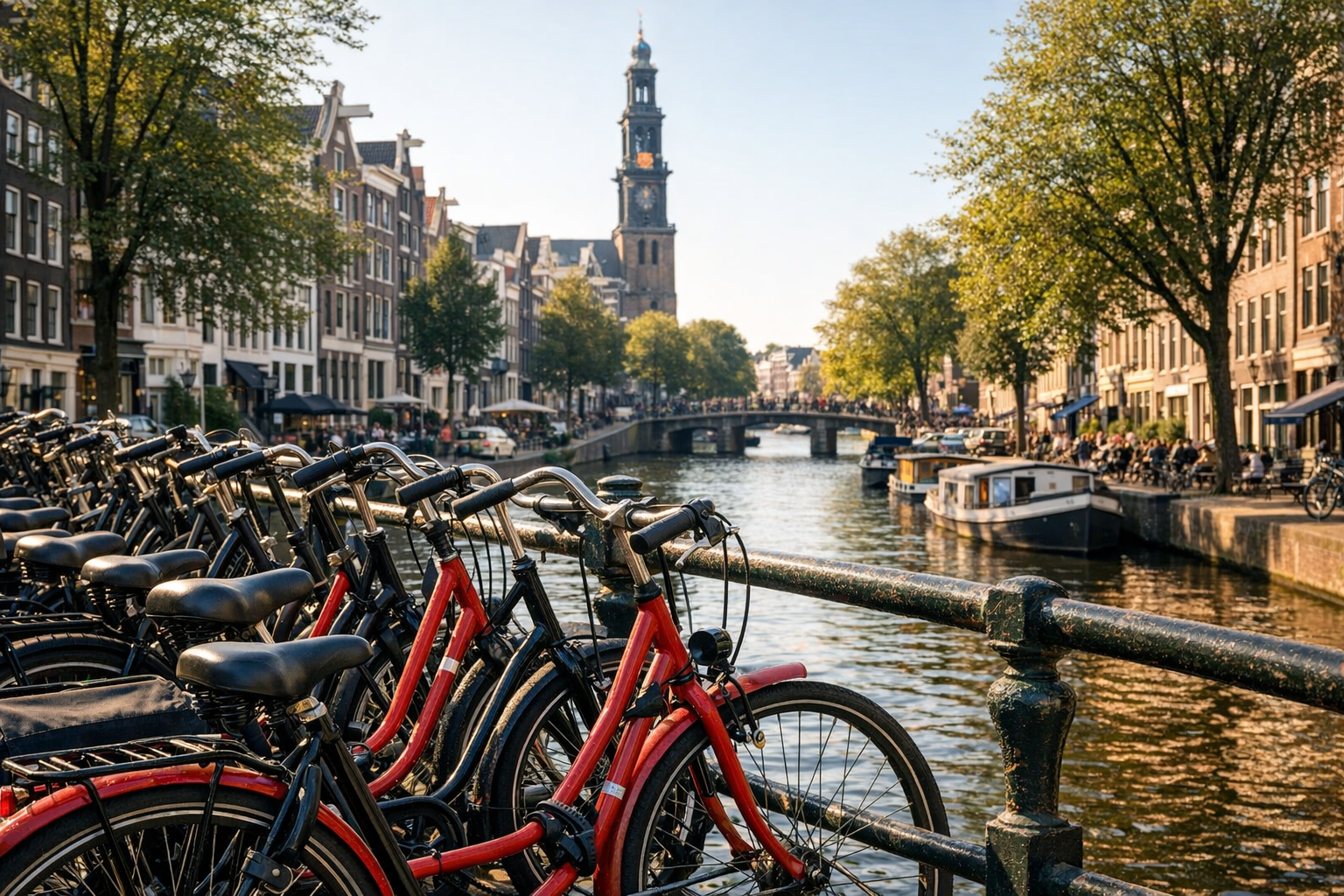 The Netherlands has 23 million bicycles for 17.9 million people. Photo: Unsplash
This isn't a joke. The Netherlands has more bicycles than people: 23 million bikes for 17.9 million residents.4 Cycling isn't a lifestyle choice here, it's infrastructure. Your commute will be faster by bike than by car in most Dutch cities.
Second-hand bikes are cheap and widely available. Budget €80 to €150 for a solid used bike at a local shop or Marktplaats (the Dutch equivalent of Craigslist). Don't buy cheap. Bike theft is common and a good lock is as important as the bike itself.
- Bicycle purchased
- Two good locks bought
- Bike registered (optional but useful if stolen)
Month One: Work and Tax
Check Your 30% Ruling Eligibility
If you've been recruited from abroad for a specialist role, you may qualify for the 30% ruling, a significant Dutch tax benefit that allows up to 30% of your salary to be paid out tax-free. For someone earning €70,000 a year, this can mean €12,000 or more in additional take-home pay annually.
Eligibility conditions include:
- You were hired from outside the Netherlands
- Your employer must apply on your behalf via the Dutch tax authority (Belastingdienst)
- The application must be submitted within 4 months of your start date. After that, you lose the benefit permanently for this role.
Ask your employer about this on day one. Many companies have HR teams who handle it, but some don't mention it unless you ask.5
- 30% ruling eligibility checked with employer
- Application submitted within 4-month window if applicable
Register Children at School (If Applicable)
School is compulsory in the Netherlands from age 5. International schools exist in most major cities but have waiting lists. Start the process as early as possible, ideally before you arrive.
Public schools are cheaper and teach in Dutch, which some families prefer for faster integration. International schools teach in English and follow international curricula, but fees can reach €10,000 to €25,000 per year.
- School options researched
- Applications submitted
Ongoing: First 3 Months
Update your address if you move from temporary to permanent housing. Notify the gemeente, your bank, health insurer, employer, and DigiD. An outdated registered address causes real problems with government correspondence.
Connect with the expat community. Internations, Meetup groups, and Facebook expat groups in your city are genuinely useful for practical advice, recommendations, and making friends faster than you'd expect.
Learn a few Dutch words. You don't need to become fluent. English is spoken almost universally in Dutch cities. But "alsjeblieft" (please), "dankjewel" (thank you), and "sorry" go a long way with locals.
The Full Checklist at a Glance
Before arrival
- Signed rental contract secured
- Passport valid 6+ months
- Birth certificate plus translations ready
- €3,000 to €5,000 buffer in accessible account
Week 1
- Gemeente registration appointment booked and attended
- BSN number received
- Dutch bank account opened
- DigiD application submitted
Week 2
- DigiD activated
- Dutch health insurance arranged
- OVpay or OV-chipkaart sorted
- Bicycle purchased
Month 1
- 30% ruling eligibility checked
- GP registered
- School applications submitted (if applicable)
- Address updated if moved to permanent housing
Moving to the Netherlands is genuinely one of the better decisions you can make in Europe. The quality of life is high, the English is excellent, and the country is small enough to feel manageable. The paperwork is front-loaded. Get through the first month and the rest becomes routine.
Looking for a job in the Netherlands? Build a Dutch-format CV at WerkCV.nl, the CV builder designed specifically for the Dutch job market.
References
Footnotes
-
Dutch government official registration guidance: government.nl/topics/moving-to-the-netherlands ↩
-
ING bank account for new arrivals: ing.nl/en/personal/current-accounts ↩
-
Dutch health insurance comparison: zorgwijzer.nl ↩
-
Cycling in the Netherlands statistics: government.nl/topics/cycling ↩
-
30% ruling information: belastingdienst.nl/30-percent-facility ↩
Get sharper Netherlands guides in your inbox
Practical travel notes, expat context, and polished city ideas without the noise.
Related articles
View category
Expat Life
How to Get Your BSN Number in the Netherlands (2025 Guide)
May 24, 2026 · 8 min read
A clear 2025 guide to getting your BSN number in the Netherlands, including who needs one, gemeente appointments, required documents, timelines, RNI registration, and common problems.

Expat Life
What Expats Should Know Before Renting in the Netherlands
May 17, 2026 · 1 min read
A practical rental guide for expats in the Netherlands covering viewings, documents, deposits, neighbourhood choices, and red flags.